
Día de Muertos in Elementary Spanish: A Respectful, Low-Prep Guide
Día de Muertos falls on November 1 and 2, and if you teach elementary Spanish, it is one of the most colorful, hands-on celebrations of the year. It can also feel like a lot to get right. This guide covers what the holiday is, what to keep in mind with young learners, and three low-prep ideas that work at any level.
What is Día de Muertos?
Día de Muertos (also called Día de los Muertos) is a celebration honoring loved ones who have died. It is celebrated mostly in Mexico and in parts of Central and South America, and it has grown among Latino communities in the United States.
Its roots go back to Indigenous peoples, including the Aztec, Maya, and Toltec, who set aside times of year to remember their dead. After the Spanish arrived, those traditions merged with All Saints Day and All Souls Day. Today, November 1 is often set aside to honor children and November 2 to honor adults. In 2008, UNESCO inscribed Mexico’s “Indigenous festivity dedicated to the dead” on its Representative List of the Intangible Cultural Heritage of Humanity.
At the heart of the celebration is the ofrenda, a temporary altar with photos and favorite things of the people being remembered. You will often see:
- El agua (water), for spirits who are thirsty
- El papel picado, colorful cut-paper banners
- El pan de muerto, a sweet bread placed as an offering
- Las velas (candles)
- El cempasúchil, the Mexican marigold, whose color and scent are said to guide spirits home
- Las calaveras, often brightly decorated sugar skulls that celebrate the cycle of life
What to keep in mind with young learners
- It is not “Mexican Halloween.” The two holidays fall side by side, but they differ in origin and meaning. Many families celebrate both, which makes a great comparison.
- Traditions vary. Customs differ from region to region and family to family. Present what you share as “many families” or “in many communities,” not as one single way.
- Keep sharing optional. A holiday about remembering loved ones can bring up big feelings. Focus on celebration and memory, and never require a learner to talk about a personal loss. If you build a class ofrenda, consider honoring a well-known person from history.
Below are low-prep ideas that are included in our curriculum to celebrate and learn about Día de Muertos.
Make sure you are logged into your Calico Spanish account to access the resources included in your Calico Spanish Curriculum subscription!
Three low-prep ideas for any level
1. Día de Muertos Finger Puppets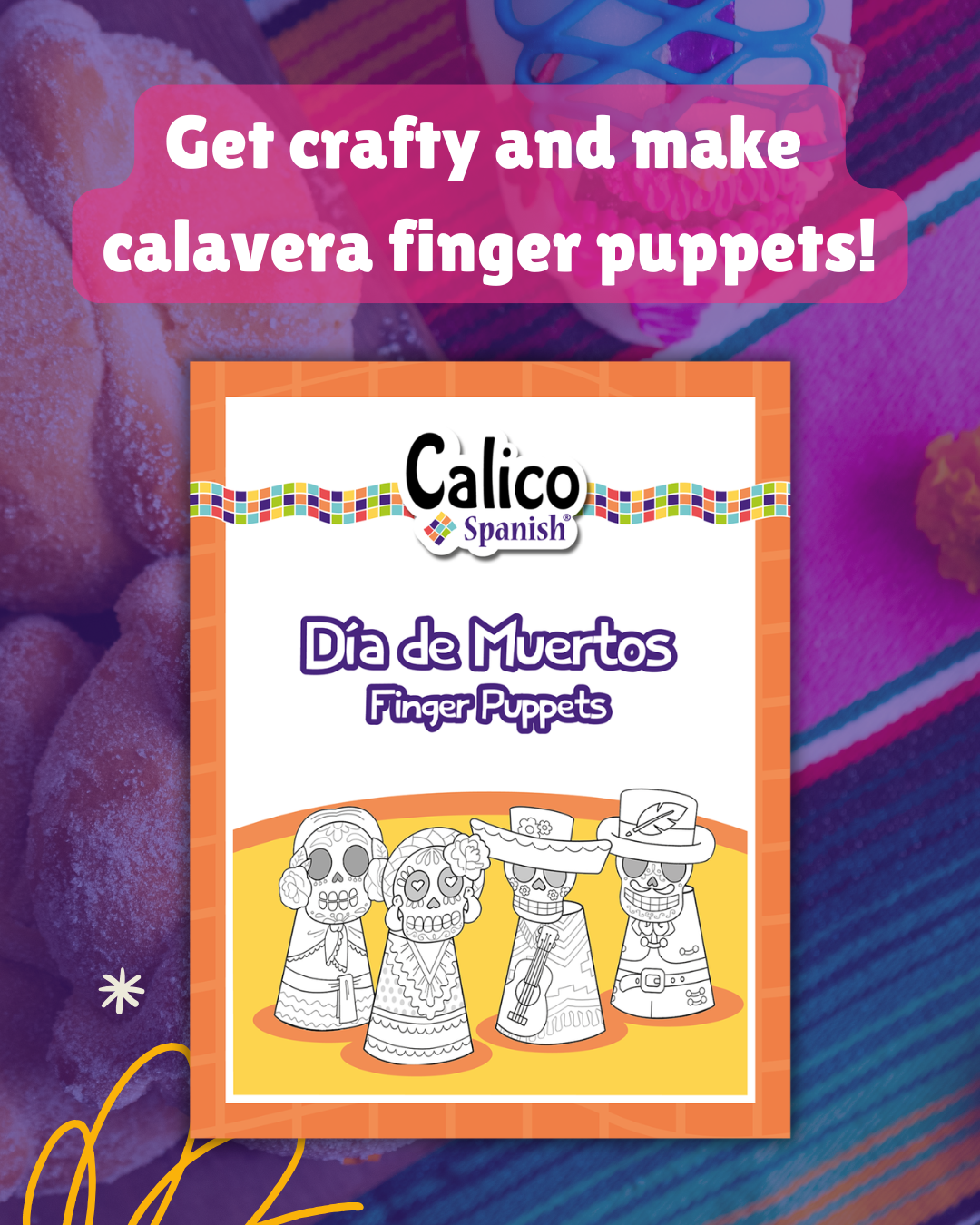
These Día de Muertos Finger Puppets are one of the most downloaded resources! These are already included in our Calico Spanish Curriculum Subscription. Allow learners to cut them out, decorate them, and then act out their most recent story or comic book. Another idea is to watch a kid-friendly video about Día de Muertos and ask learners to act out the information they learned with the finger puppets! Click here to access the finger puppets and additional DDLM content inside of your curriculum subscription!
2. Count the marigolds by tens
Bundle paper marigolds (or orange paper circles) in groups of ten. Count together, diez, veinte, treinta, and have learners hold up a bundle on each number. Older learners can go all the way to cien. Mix the bundles up and count again: repetition with movement is how numbers stick.
3. Monarch butterfly migration exploration
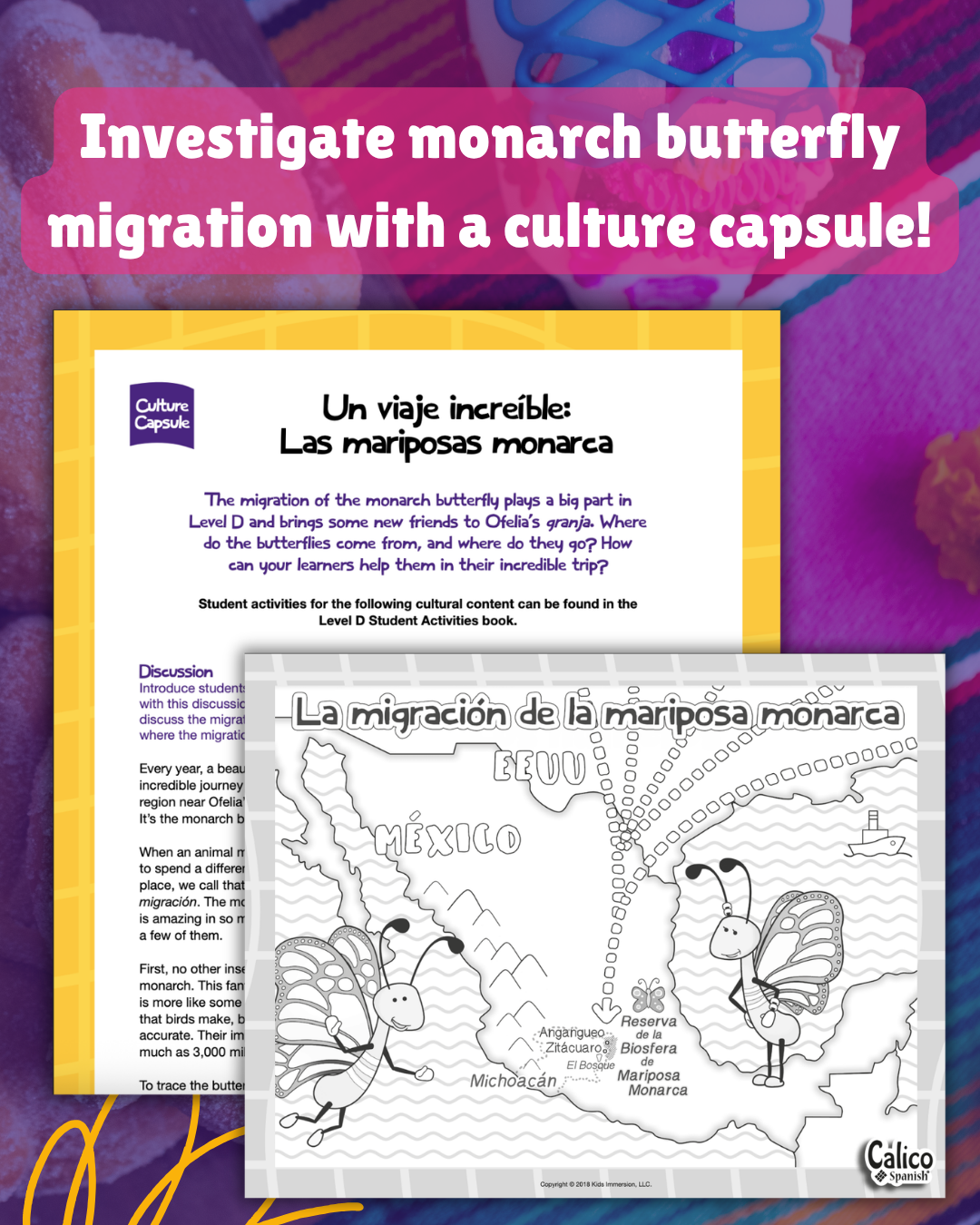
Right around Día de Muertos, the first monarch butterflies reach Mexico for the winter, and in many communities monarchs are believed to carry the spirits of loved ones who have died. That makes the migration a natural science and culture connection for this time of year.
If you teach Calico Level D, you already have a full lesson on it: the Unit 6 culture capsule, Un viaje increíble: Las mariposas monarca. Its Can-Do Statement is “I can investigate the migration of monarch butterflies,” and it includes a cultural discussion, thinking through how human choices affect the animal world, investigating amazing migrations, and using maps to trace and predict the butterflies’ path. Like the Día de Muertos culture capsule, it may take more than one day. Level D learners first meet the migration in Unit 3, where a map activity has them find el norte and el sur and say where the butterflies fly.
If you teach Calico Level D
Día de Muertos is already part of your plans. Level D Unit 3 is set during the celebration, and Day 12 is the Día de Muertos Culture Capsule. Learners discuss the holiday, think about how people remember their loved ones, compare it with Halloween, and label an ofrenda. The unit guide notes that the capsule may take more than one day, so give it room.
Unit 3 also includes a bonus comic, Andrés celebra el Día de Muertos. Andrés el ajolote and his family shop at the market for papel picado, candles, and ingredients for pan de muerto, then set up an altar at home with marigolds, sugar skulls, water, and family photos.
Lastly, you can click here to access our exclusive DDLM Resource bundle that compiles many of these resources, including the finger puppets, into one single PDF file.
A simple place to start
Pick one idea above and try it this week. If you want a few songs and videos to round out your lessons, our free Games and Videos page has plenty that fit right into the season.

No Comments