
Spanish World Cup Activities for Any Learner!
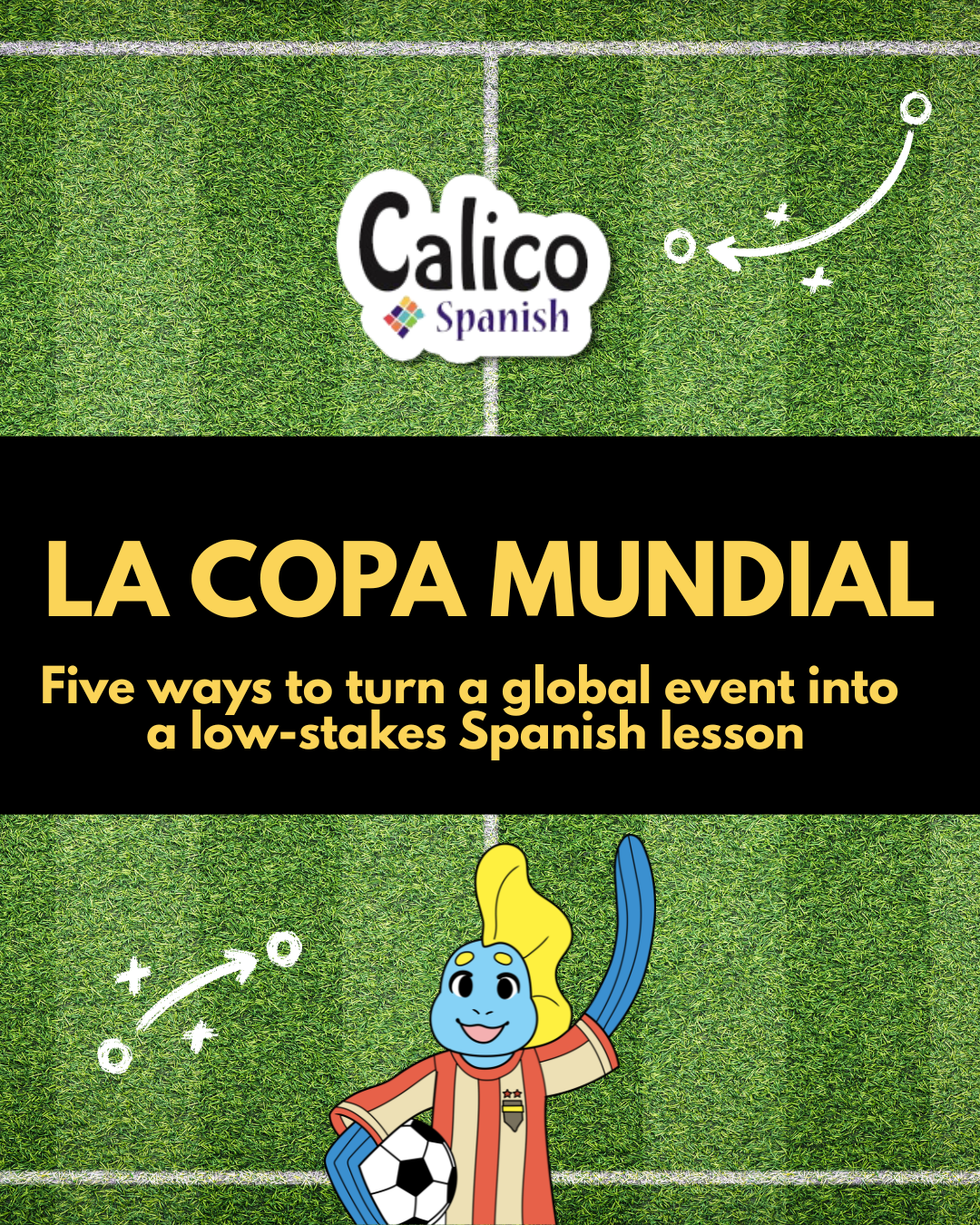 The 2026 FIFA World Cup is here. If you have been looking for a natural way to keep Spanish alive this summer without any formal lesson planning, this is it.
This year’s tournament is being hosted across the US, Canada, and Mexico, which means more Spanish on TV, radio, and social media than any other summer in recent memory. Spanish-speaking countries from across Latin America and Europe are competing, and for kids, the excitement of el partido (the game) makes the language feel real in a way that worksheets simply cannot.
You do not need a lesson plan. You just need the game.
Watch at Least One Game in Spanish
Flip to Telemundo or Univision and watch even just a few minutes of World Cup coverage with learners. Spanish sports commentary is fast and enthusiastic, but it is also repetitive and contextual, which makes it surprisingly accessible for young learners.
They do not need to understand every word. They just need to hear the language in a moment that actually matters to them.
When a goal is scored, they will hear “¡GOOOOL!” and they will know exactly what happened. No translation needed. That is comprehension, and it costs nothing.
Even if your family does not typically watch soccer, tuning in for ten minutes and listening to the Spanish commentary together is a real language experience. Point things out. Ask questions. See what they catch.
Pro Tip: Find a clip of a game on YouTube and slow the video down to make the language a little easier to understand.
Learn the Vocabulary of La Copa Mundial
A quick way to build Spanish vocabulary during the World Cup: learn the words for what you are already watching. A few to introduce before or during a game:
el partido: the match
el gol: the goal
el equipo: the team
el jugador: the player
el portero: the goalkeeper
el arbitro: the referee
la pelota: the ball
ganar: to win
perder: to lose
un empate: a tied game
el campeon: the champion
tiempo extra: extra time
Your learners will hear these words over and over throughout the tournament, always attached to something happening on screen. That repetition, with real context behind it, is exactly how vocabulary sticks.
Play La Copa Mundial Bingo While You Watch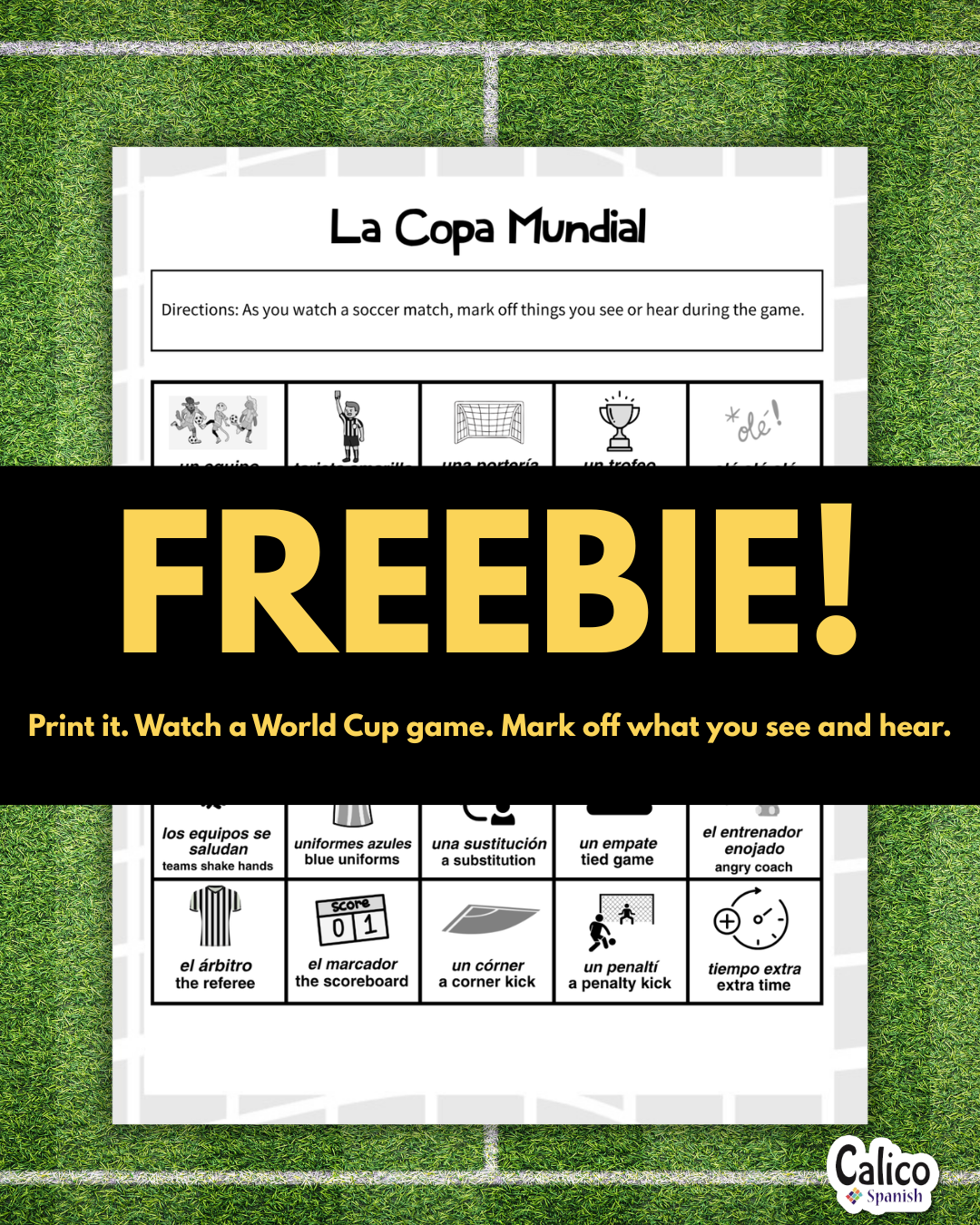
We made a free bingo card designed specifically for watching World Cup games with kids. Each square has a Spanish word or phrase paired with something you might see during a match: el arbitro, tarjeta roja, un penalti, tiempo extra, uniformes azules, el entrenador enojado, and more.
As you watch, your kids mark off what they see and hear. It keeps them listening closely the whole match, not just following the action but hunting for Spanish words.
The bingo card works at any Spanish level. Beginning learners will recognize the pictures and pick up new words from context. More advanced learners can use the Spanish terms to narrate what is happening on screen.
Download the free La Copa Mundial Bingo card here!
Talk About the Countries
The World Cup is also a geography lesson. Teams from across Latin America and Europe are competing, and each match is a chance for your kids to connect Spanish to a real place and a real culture.
If you use Calico Spanish, your learners have already been building those connections. Level D is set on a farm in Michoacan, Mexico, and your kids have spent a full year learning about Mexican culture, climate, and everyday life. When Mexico takes the field, the country is already familiar to them.
Try asking your kids what they know about a team’s home country. What is the weather like there? What do people eat? They may know more than you expect after a year of curriculum.
If you want to go deeper, Calico Spanish’s culture capsules appear in every level and are worth revisiting. Each one explores a specific aspect of life in a Spanish-speaking country, from homes and food to celebrations and geography.
Root for a Team in Spanish
Let your kids pick a Spanish-speaking team to cheer for and learn how to do it in Spanish.
“¡Vamos, Mexico!” is a complete Spanish sentence.
“¡Bien jugado!” means “well played.”
“¡Que partido!” means “what a game!”
“¡Gol, gol, gol!” needs no translation.
Language sticks when there is real emotion behind it, and sports delivers that better than almost anything else. When your kids are invested in a team, they will remember the words they used to cheer for them.
The Curriculum Connection: ¡Queremos jugar fútbol!
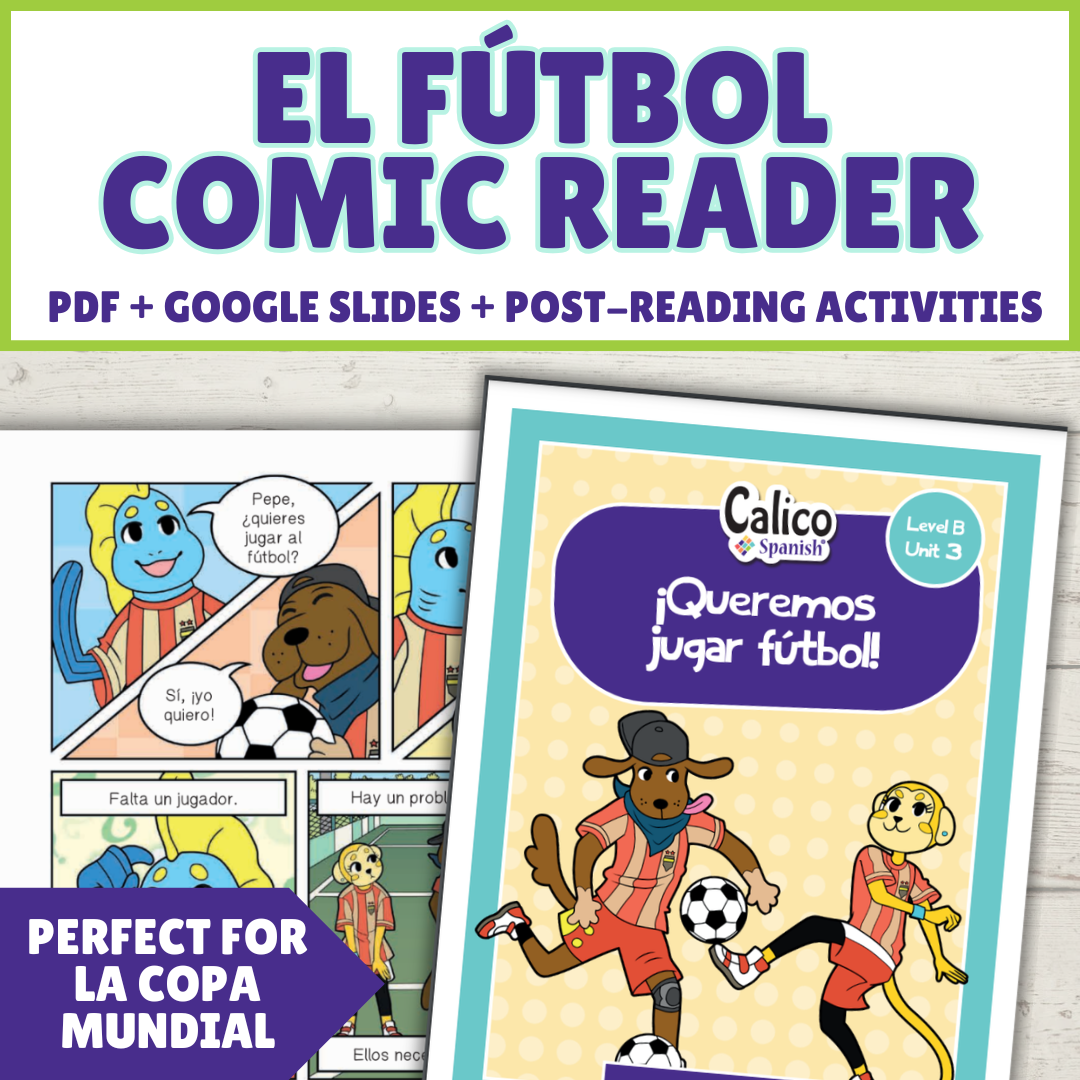 If your learners are in Level B of Calico Spanish, the World Cup connection is built right into their curriculum.
Unit 3 of Level B features a comic called ¡Queremos jugar fútbol! and it is set in Argentina. Pepe, María, and Pedro find themselves on a campo de fútbol (soccer field) in Argentina, one of the most fútbol-obsessed countries in the world and the reigning World Cup champion. They want to play but they need one more jugador (player). The whole story is about forming their equipo (team) so they can finally take the field.
The vocabulary your Level B learners built through that unit maps directly onto what they will hear during World Cup coverage:
el jugador: the player. Every commentator uses this word constantly.
el equipo: the team. You hear it before every match.
las porterías: the goalposts. Visible on screen every time the camera pans the field.
la pelota blanca y negra: the black and white ball. The classic soccer ball they described in the comic.
atlético/a: athletic. A word they practiced in the ¿Eres atlético? interview post-reading activity.
jugar al fútbol: to play soccer. The very thing every player in el Copa Mundial is doing.
When your learner sees Argentina take the field this summer, they have already been there, on a campo de fútbol with Pepe, María, and Pedro. Calico built that connection before the tournament even started.
Log into your Calico Spanish subscription and click here to find the B3 Calico Comic resources.
Print the Free Level B Finger Puppets and Act Out a Game!
In Level B, there is a free printable set of finger puppets that pairs perfectly with La Copa Mundial, and it comes with a soccer field background.
The set includes Pepe (un perro café), Goyo (un gato negro, who is literally holding a soccer ball in his red uniform), and Camilo (un conejo blanco). Print them, cut them out, and fold them into finger puppets. Then print the background: un partido de fútbol, a full campo de fútbol complete with porterías, a pelota blanca y negra, and a scoreboard.
Put the characters on the field and let your learners call the match. They can use vocabulary they already know: ¿Quieres jugar? Un equipo. Un jugador. ¡Gol! The same language from their lessons, now in the middle of their own Copa Mundial.
This works especially well during or after a real game. Your learners just watched professionals play on a real campo de fútbol. Now they get to play on one too.
Click here to download Level B finger puppets!
The Best Spanish Lesson of the Summer Is Already on Your TV
You do not need to prep anything. Just turn on the game, print the bingo card, and let the immersion happen.
The World Cup runs through mid-July, so there is still time. Watch one game in Spanish. Learn five words. Cheer loudly. See what sticks.
That is what summer Spanish looks like. Now go enjoy el partido.
Want to keep the Spanish going all summer? Explore free resources and curriculum at calicospanish.com.

No Comments