
8 Earth Day Lesson Ideas for Your Elementary Spanish Class
Every April, Earth Day rolls around and teachers start looking for activities that feel meaningful without requiring a complete overhaul of their lesson plans. If you teach elementary Spanish, you probably already have everything you need.
The natural world is woven into the Calico Spanish curriculum from the very beginning. From hiking trails to butterfly migrations, your learners have been exploring the earth in Spanish all year long. El Día de la Tierra is a good time to highlight what’s already there.
Here are eight lesson ideas you can pull straight from your Calico Spanish curriculum to celebrate El Día de la Tierra this April 22.
What Is El Día de la Tierra (Earth Day)?
April 22 is Earth Day (El Día de la Tierra), an international day dedicated to celebrating and protecting our planet. It’s observed in more than 190 countries and is a natural bridge between Spanish language learning and science, social studies, and environmental awareness.
Introducing the phrase El Día de la Tierra to your learners is one good way to connect language to the world outside the classroom. April 22 is also a useful moment to take stock of the nature vocabulary they already know: el árbol, el sol, el pájaro, el agua, la tierra.
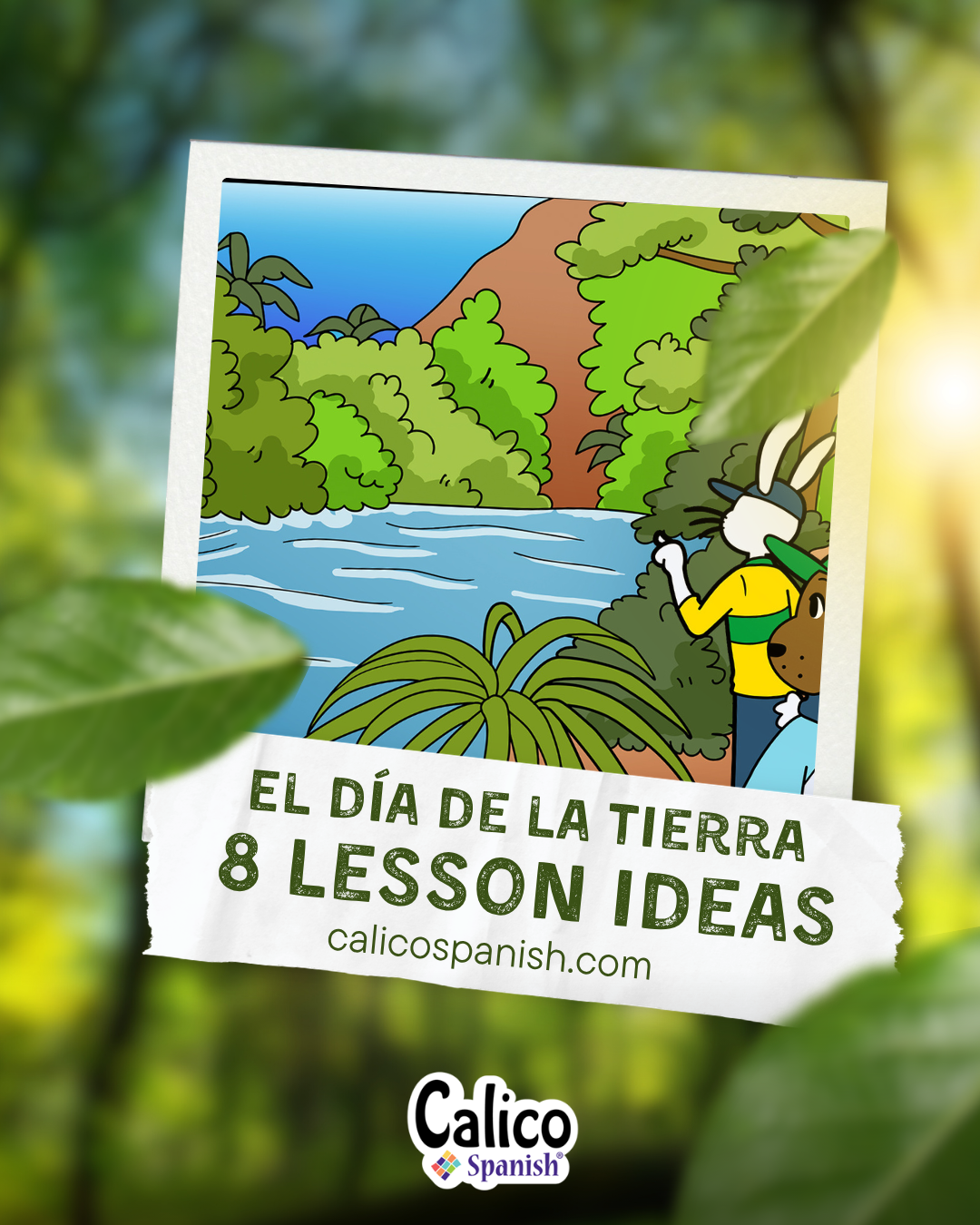
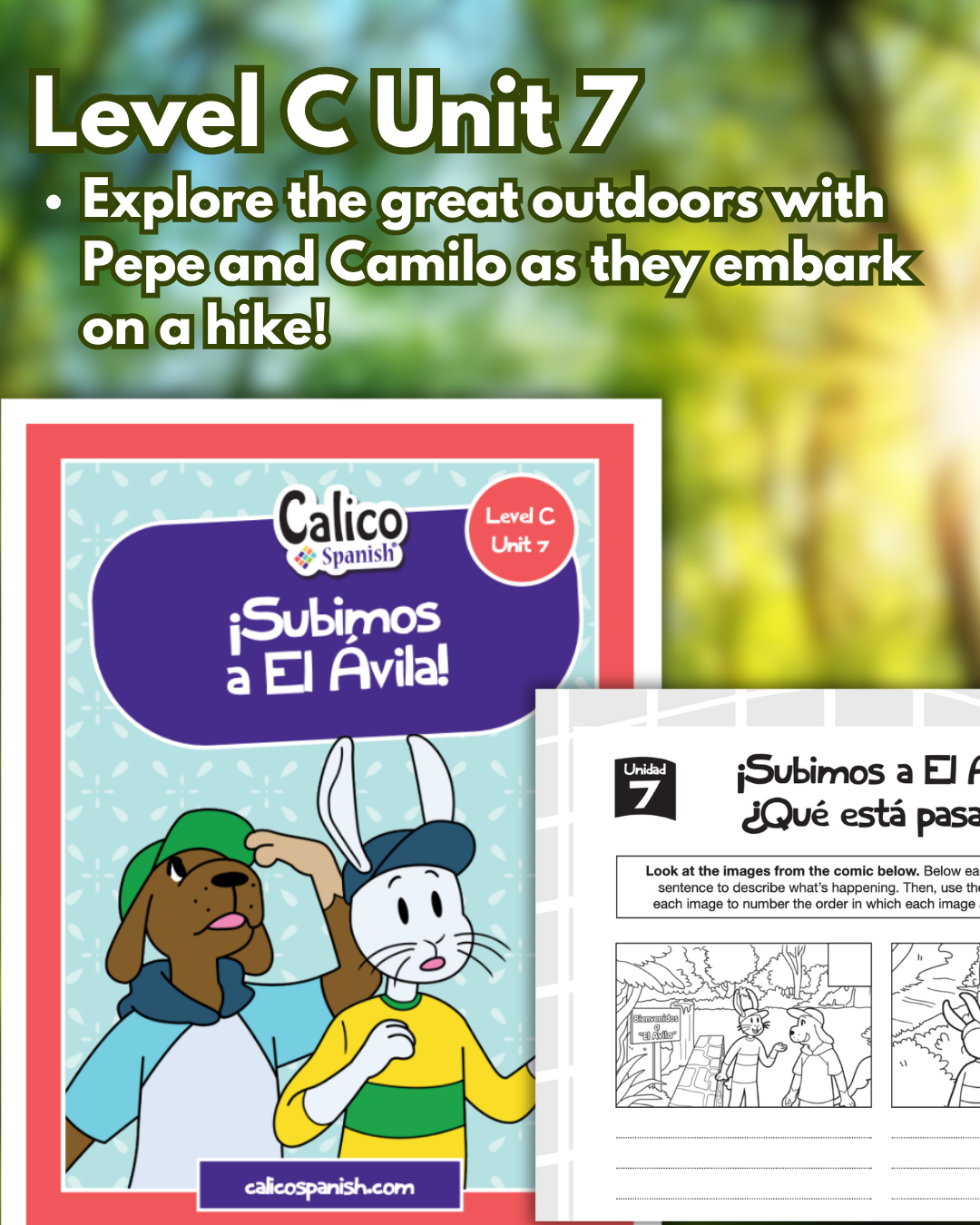
Idea #1: Take a Hike with Pepe and Camilo (Level C, Unit 7)
In Level C Unit 7, ¡Subimos a El Ávila!, Pepe and Camilo head into the great outdoors on a mountain hike in Venezuela. Learners follow along as the characters navigate the trail and describe what they see and experience along the way.
This unit works particularly well for Earth Day because it puts nature vocabulary inside a story-driven context rather than a worksheet. If your class is currently in Level C, this is a good week to revisit Unit 7. The mountain setting, the outdoor adventure, and the real-world geography make it one of the most Earth Day-friendly units in the whole curriculum.
Idea #2: Follow the Monarch Butterflies (Level D, Unit 6)
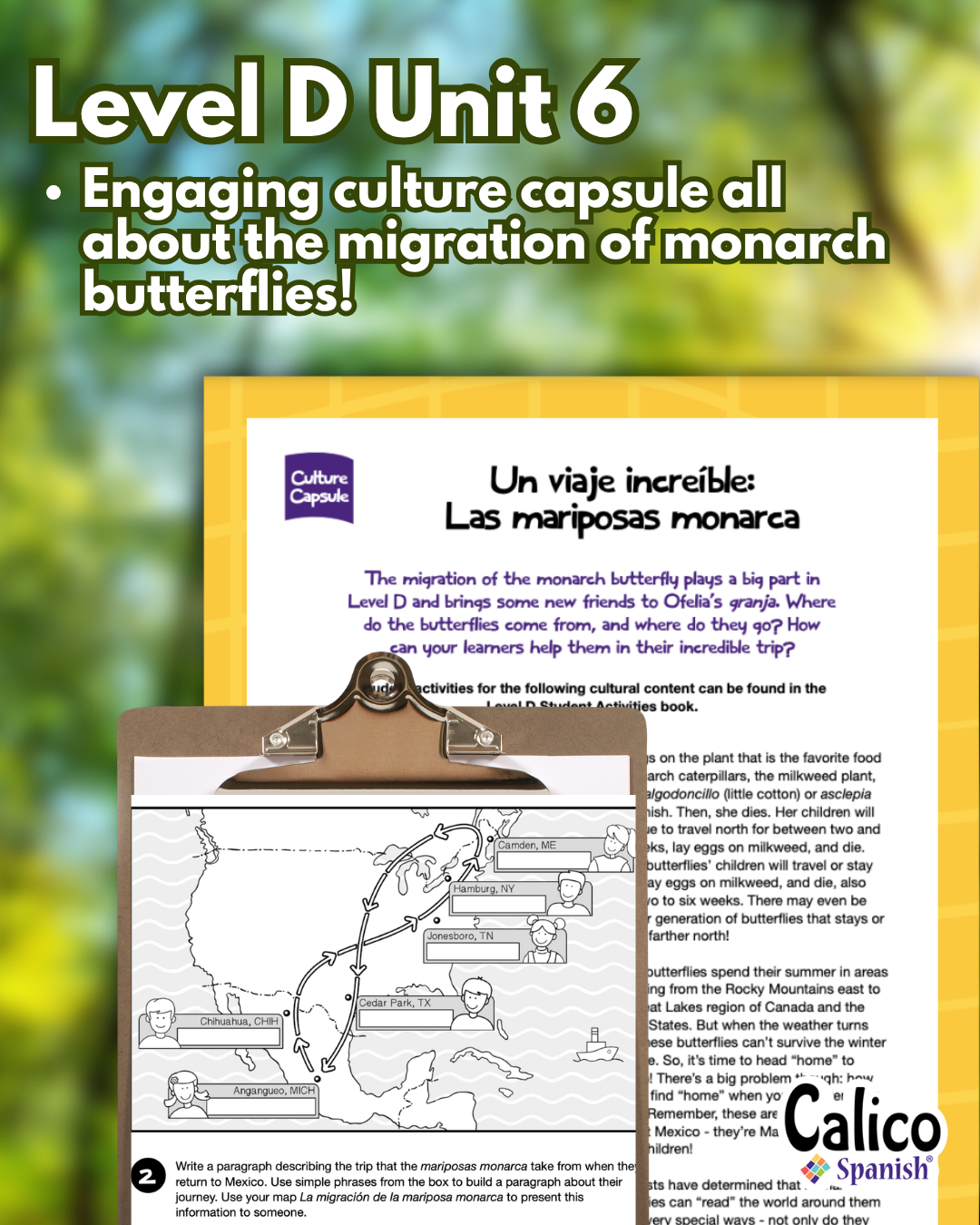
One of the most remarkable migrations on the planet happens right in North America: the annual journey of the monarch butterfly. Level D Unit 6 is built around this, with a culture capsule titled Un viaje increíble: Las mariposas monarca. This culture capsule is included in our curriculum subscription, but it can also be purchased separately.
Learners explore where monarchs come from, how they travel from Canada and the United States all the way down to Mexico, and what the migration means culturally and ecologically. It connects Spanish to science in a way that tends to stick, and Earth Day is a good week to revisit it.
Idea #3: Explore the Climate of Mexico (Level D, Unit 1)
Level D Unit 1 dives into El clima de México, giving learners an in-depth look at how climate and weather vary across Mexico’s diverse geography. The unit includes a presentational speaking activity where learners research and discuss Mexico’s weather patterns.
Climate and environment are inseparable here. Discussing how geography shapes weather across Mexico’s regions can lead to broader conversations about the natural world.
Ideas #4 and #5: Weather and Clothing Activity Sheets (Level D, Units 5 and 7)
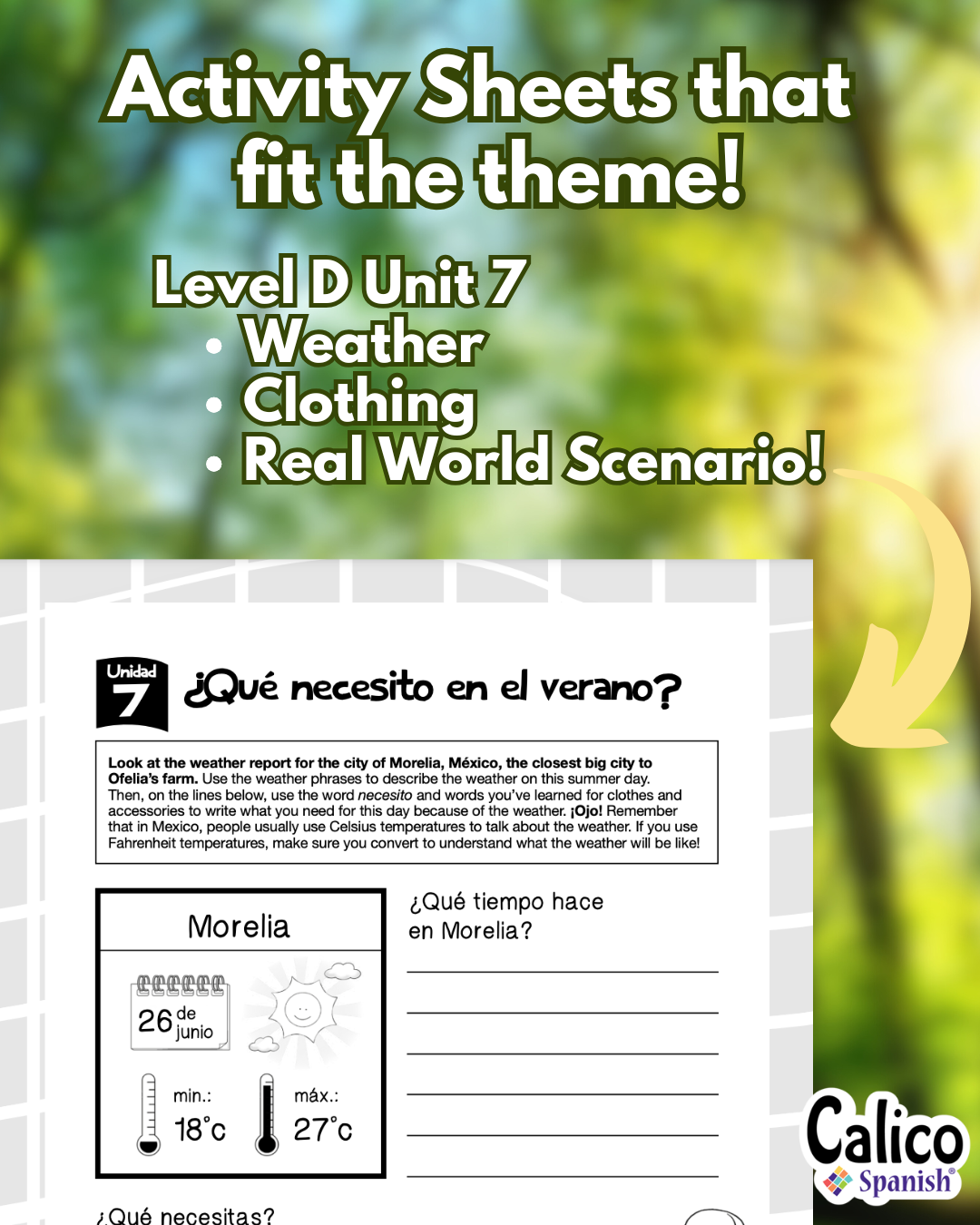
Level D Units 5 and 7 both include activity sheets that connect weather, clothing, and the natural world in practical ways. Unit 5’s Cuando llueve, usamos… has learners survey their classmates about what they wear in the rain and create a bar graph with the results. Unit 7’s ¿Qué necesito en el verano? drops learners into a real-world scenario in Morelia, México, where they use actual temperature data to decide what to wear.
Both activities ground the weather in the real world, which suits Earth Day well. The natural world shows up in what we wear, what we eat, and how we live.
Idea #6: Head Outside for a Scavenger Hunt (Level B, Unit 2)
This one is probably the most hands-on of the bunch. Level B Unit 2 includes Busca una…, a ready-made outdoor scavenger hunt designed for novice learners. Learners head outside to find and identify objects in nature: la hormiga, la piedra, el árbol, la hoja, el columpio, el pájaro, el banco, el sol.
Click here to download the free scavenger hunt!
When they find something, they tell their partner lo encontré (for masculine nouns) or la encontré (for feminine nouns). It’s low-prep, keeps kids moving, and stays entirely in the target language. If the weather cooperates this week, it’s a good way to get your learners outside and speaking Spanish.
Idea #7: Revisit Nature Vocabulary Across Levels
One of the things that makes Calico Spanish so well-suited to Earth Day is how consistently nature vocabulary appears across units and levels. Words like el sol, el árbol, el agua, la hoja, el pájaro, el campo show up in songs, stories, and activities from Level A all the way through Level D.
Earth Day is a great excuse to do a vocabulary review with your class. Pull up a nature-themed flashcard set, play a round of Matamoscas (Fly Swatter) with nature words, or display a nature poster and do a few rounds of Veo Veo (I Spy) in Spanish. Your learners already know more of this vocabulary than you might think.
Idea #8: Connect to the Bigger Picture
Language learning is about more than vocabulary and grammar; it builds familiarity with the world and with people who live very differently from us. Earth Day is a good moment to step back and remind your learners why they’re learning Spanish.
Spanish is spoken in 20+ countries around the world, spanning rainforests, deserts, coastlines, mountain ranges, and plains. When your learners study Spanish, they’re building a connection to the people who live in and care for those places.
A simple conversation starter for Earth Day: ¿Qué te gusta de la naturaleza? (What do you like about nature?) Have your learners share in English if needed, but introduce the Spanish for what they say. Las flores. Los árboles. El sol. Los animales. Let the language grow from what they already love.
Make Earth Day a Spanish Classroom Tradition
You don’t need a special unit or a separate curriculum to celebrate Earth Day in Spanish. Your learners are already doing it. They’ve been hiking with Pepe and Camilo, following monarch butterflies across the continent, and building vocabulary for the natural world all year long.
April 22 is a chance to mark that, and to let your learners see how much they’ve already learned about the world in Spanish.
Feliz Día de la Tierra. Happy Earth Day.
Want to explore more lesson ideas for your Spanish classroom? Visit calicospanish.com to see the full curriculum.d

No Comments